The Hidden Cost of Spreadsheet Workflows: What Your Recruiting Agency Is Losing Every Month
It feels free.
That’s the trap. Google Sheets is free. Excel is already on your laptop. You start with one tab for candidates, one for clients, and a few "if-then" statements to color-code the status. It works for the first five hires. It’s manageable for the first ten.
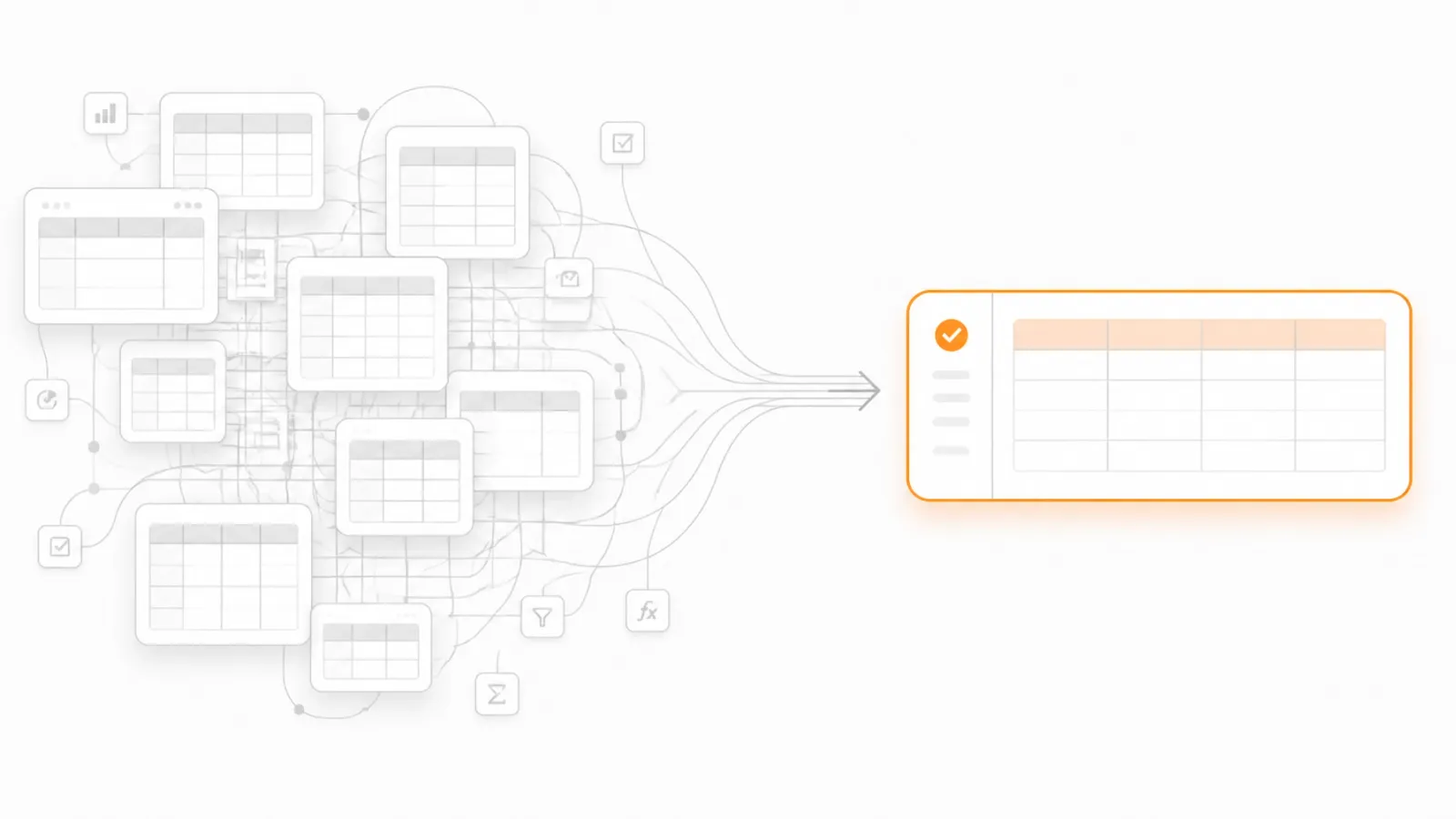
Then you hire a second recruiter. Then a third. Suddenly, you aren't running an agency; you’re managing a multi-tab marathon.
We see this at Beacon Labs every week. Founders come to us because their "system" is actually just six different spreadsheets held together by copy-paste and sheer willpower. They think they’re saving money by avoiding a "per-seat" SaaS bill.
They’re wrong. They’re paying for it in lost placements, recruiter burnout, and data rot.
The Multi-Tab Marathon: Where 33 Hours a Year Go to Die
In a manual workflow, data doesn’t move. It’s carried.
Every time a CV comes in via email, someone has to manually type the name, contact info, and source into a sheet. Then they do it again for the client submittal sheet. Then again for the interview tracker.
Studies show recruiters spend roughly two minutes per CV just on basic tracking. For a modest hiring volume, that’s 33+ hours per year per recruiter spent on pure data entry.
If you’re paying a recruiter $35/hour, you’re burning over $1,000 per year just to have them act as a human bridge between two software programs. Multiply that by a team of five. That’s $5,000 in invisible labor. None of it produced a placement. All of it was manual.
The friction builds up in the "stitching." When tools don't talk to each other, the humans have to do the talking for them. It’s an exhausting, low-value load-bearing task that eventually breaks.

The 88% Rule: Your Data Is Probably Lying to You
Here is a visceral truth: 88% of spreadsheets contain errors.
In a recruiting agency, these aren't just typos. They are revenue leaks. A misplaced decimal in a bill rate, a candidate marked "interviewed" who was actually "rejected," or a follow-up date that was never keyed in.
Manual data entry has a baseline error rate of 1% to 4%. When you are handling thousands of candidate records across a dozen sheets, those errors compound. They turn your "source of truth" into a Frankenstein system.
We recently did a GAP assessment for a firm that realized they had three different versions of their "active pipeline" sheet. One was on a recruiter’s desktop. One was in a shared folder. One was an email attachment from last Tuesday.
None of them matched. The founder was making hiring decisions based on a hallucination.
The Ghost Candidate: A 42% Drop-off Rate
The biggest cost isn't the recruiter's time; it's the candidates you lose because your spreadsheet didn't remind you to call them.
Manual tracking increases candidate drop-off by 42%. In a high-stakes market, speed is the only real moat. If a candidate stays in your "applied" column for three days because nobody saw the notification, they’re gone. They’ve already signed with a competitor who uses an automated system like RecruitOS.
When follow-ups are manual, they are optional. You rely on "tribal knowledge", the hope that your team remembers every detail of every conversation. But memory isn't a scalable system.

The High Price of "Sort-of Fits"
Most agencies try to fix this by duct-taping more tools together. They add a scheduling tool, a separate CRM, and an email sequencer.
Now they have five different subscriptions. None of them talk to each other. All of them charge per seat.
This is where the "load-bearing" nature of spreadsheets becomes a liability. You end up spending more time managing the tools than using them. You’re paying for a "standard" solution that only "sort-of fits" your specific workflow.
At Beacon Labs, we believe in building around how teams actually operate. Whether it’s a custom studio build or a specialized platform like RecruitOS, the goal is the same: replace 6+ tools with 1 platform.
We stop the "multi-tab marathon" by building the automation directly into the scaffolding of the business.
Is Your Workflow Under Threat?
If you aren't sure if your spreadsheets are costing you, ask yourself these three questions:
1. Could you go on vacation for a week without your pipeline stalling? If the answer is "no," you have a "tribal knowledge" problem, not a system.
2. How long does it take to generate a real-time report for a client? If it takes more than 60 seconds, you’re manually reformatting data. That’s a revenue leak.
3. Do you have more than three versions of your "master" candidate list? If so, you don’t have a master list. You have a mess.
From Friction to Flow
Systemization isn't about buying more software. It’s about removing the manual steps until the work flows by itself.
It’s about moving from a "human-bridged" workflow to a "software-driven" one. This saves more than just money; it saves your team’s sanity. It replaces the "I think we emailed him" with "The system tracked the open, the click, and the reply."
If you’ve outgrown your spreadsheets, you have two choices: keep paying the hidden tax of manual labor, or build a foundation that actually scales.
We’ve helped agencies replace their "Frankenstein systems" with RecruitOS and custom builds in weeks, not quarters. We start with a GAP assessment to find the leaks before we write a single line of code.
Stop paying for tools that don't talk. Build a platform that works.